

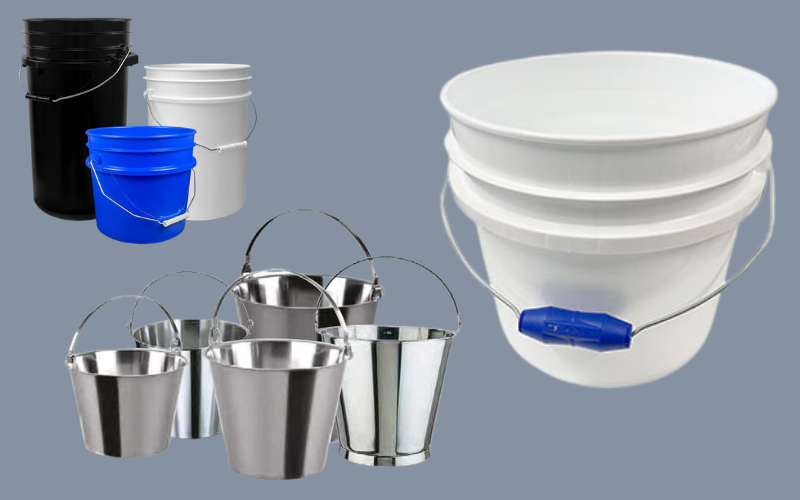
Choosing the Right Bucket Handle Material: Steel vs. Plastic vs. Aluminium
Selecting the right material for bucket handles is a critical decision that directly influences product performance, durability, and user satisfaction. In industrial packaging, where buckets are used to store and transport paints, chemicals, lubricants, and adhesives, the handle must withstand load, resist corrosion, and provide consistent usability.
At Shriram Handles, we specialise in manufacturing high-quality bucket handles using advanced materials and precision forming techniques. Understanding the differences between steel, plastic, and aluminium handles can help manufacturers choose the most suitable option for their specific application.
1. The Importance of Material Selection in Bucket Handle Manufacturing
The material used in a bucket handle determines its strength, cost, and lifespan. Industrial and consumer-grade buckets face different challenges — from outdoor exposure to chemical contact and mechanical stress during transport.
A well-chosen handle material ensures:
- Long-term performance under heavy loads
- Resistance to bending, corrosion, and deformation
- Smooth ergonomic handling for end-users
- Compatibility with automated assembly processes
At Shriram Handles, material selection is based on application needs, industry standards, and customer specifications.
2. Steel Bucket Handles – The Industry Standard for Strength
Steel remains the most commonly used material for bucket handle manufacturing due to its superior strength and load-bearing capacity.
Advantages:
- Excellent mechanical strength for heavy-duty buckets
- High durability and resistance to deformation under load
- Can be galvanised or nickel-plated for enhanced corrosion protection
- Ideal for paint, lubricant, and construction-grade buckets
Applications:
Steel handles are widely used in industrial packaging, adhesive buckets, paint containers, and chemical storage units where strength and reliability are essential.
Customisation Options:
Shriram Handles offers mild steel, galvanised steel, and stainless-steel variants with custom wire diameters, precision bending, and plastic grip attachments to ensure comfort and safety.
3. Plastic Bucket Handles – Lightweight and Economical
Plastic handles are popular for lightweight consumer buckets, especially in household and retail packaging. These handles are generally made from polypropylene (PP) or high-density polyethene (HDPE).
Advantages:
- Cost-effective and lightweight
- Available in a variety of colours for brand differentiation
- Corrosion-free and easy to clean
- Comfortable to grip and suitable for low-weight buckets
Applications:
Plastic handles are ideal for food containers, detergent buckets, household products, and promotional packaging where the load is moderate and appearance matters.
Limitations:
They are less suited for high-load industrial use or harsh environments, as they can deform under heavy weight or prolonged stress.
4. Aluminium Bucket Handles – The Balance Between Strength and Weight
Aluminium offers a middle ground between steel and plastic. It provides good strength while being significantly lighter than steel, making it suitable for applications that require durability with reduced overall weight.
Advantages:
- High corrosion resistance, especially in outdoor or humid conditions
- Lightweight yet mechanically strong
- Visually premium and ideal for high-end packaging
Applications:
Aluminium handles are commonly used in paint, coating, and cosmetic packaging industries that prioritise appearance and performance.
Limitations:
Slightly higher in cost than steel or plastic, and not ideal for extremely heavy-duty applications.
5. Comparative Summary: Steel vs. Plastic vs. Aluminium
| Property | Steel | Plastic | Aluminium |
|---|---|---|---|
| Strength | Very High | Moderate | High |
| Corrosion Resistance | Moderate (can be improved with coating) | Excellent | Excellent |
| Weight | Heavy | Light | Very Light |
| Cost | Moderate | Low | High |
| Best Use | Industrial buckets | Consumer packaging | Premium lightweight buckets |
This comparison shows that steel handles remain the most suitable for industrial and heavy-duty packaging, while plastic and aluminium handles cater to specialised consumer and lightweight applications.
6. How Shriram Handles Ensures Material Quality and Performance
At Shriram Handles, every material is selected after extensive testing for tensile strength, coating adhesion, and dimensional accuracy.
Our production line includes:
- Automated wire bending and end-forming machines for precision manufacturing
- In-house plating and coating units for corrosion protection
- Load testing systems to validate weight-bearing capacity
We also offer customised solutions for clients who require specific finishes or grip types. This approach ensures every handle meets the performance expectations of industrial packaging environments.
7. Conclusion
The right bucket handle material can enhance your product’s strength, usability, and brand reliability. Steel handles deliver unmatched durability for industrial applications, plastic handles offer affordability and flexibility, while aluminium handles combine strength with light weight for premium packaging.
At Shriram Handles, we guide our clients through material selection to ensure the perfect balance between cost, performance, and design. With advanced manufacturing expertise and quality assurance, we help industries achieve packaging efficiency that lasts.